Monday, March 31, 2014

[Q688.Ebook] Download PDF Refrigeration and Air Conditioning Technology, by Bill Whitman, Bill Johnson, John Tomczyk, Eugene Silberstein

Download PDF Refrigeration and Air Conditioning Technology, by Bill Whitman, Bill Johnson, John Tomczyk, Eugene Silberstein

Your impression of this publication Refrigeration And Air Conditioning Technology, By Bill Whitman, Bill Johnson, John Tomczyk, Eugene Silberstein will certainly lead you to acquire what you exactly need. As one of the motivating books, this publication will certainly provide the presence of this leaded Refrigeration And Air Conditioning Technology, By Bill Whitman, Bill Johnson, John Tomczyk, Eugene Silberstein to accumulate. Even it is juts soft documents; it can be your collective documents in gadget as well as various other gadget. The crucial is that usage this soft documents book Refrigeration And Air Conditioning Technology, By Bill Whitman, Bill Johnson, John Tomczyk, Eugene Silberstein to read and also take the advantages. It is just what we indicate as book Refrigeration And Air Conditioning Technology, By Bill Whitman, Bill Johnson, John Tomczyk, Eugene Silberstein will certainly improve your thoughts as well as mind. After that, reading publication will likewise enhance your life high quality much better by taking excellent activity in balanced.

Refrigeration and Air Conditioning Technology, by Bill Whitman, Bill Johnson, John Tomczyk, Eugene Silberstein

Refrigeration and Air Conditioning Technology, by Bill Whitman, Bill Johnson, John Tomczyk, Eugene Silberstein


Refrigeration and Air Conditioning Technology, by Bill Whitman, Bill Johnson, John Tomczyk, Eugene Silberstein

Download PDF Refrigeration and Air Conditioning Technology, by Bill Whitman, Bill Johnson, John Tomczyk, Eugene Silberstein

Invest your time also for just few minutes to check out a publication Refrigeration And Air Conditioning Technology, By Bill Whitman, Bill Johnson, John Tomczyk, Eugene Silberstein Checking out a publication will never ever decrease and waste your time to be worthless. Reading, for some folks come to be a requirement that is to do daily such as spending quality time for consuming. Now, what regarding you? Do you want to review a book? Now, we will certainly reveal you a new e-book qualified Refrigeration And Air Conditioning Technology, By Bill Whitman, Bill Johnson, John Tomczyk, Eugene Silberstein that could be a new method to explore the knowledge. When reviewing this e-book, you can get one thing to always bear in mind in every reading time, even tip by step.

Do you ever before recognize guide Refrigeration And Air Conditioning Technology, By Bill Whitman, Bill Johnson, John Tomczyk, Eugene Silberstein Yeah, this is an extremely intriguing book to check out. As we informed recently, reading is not type of commitment task to do when we have to obligate. Reviewing must be a behavior, an excellent routine. By reading Refrigeration And Air Conditioning Technology, By Bill Whitman, Bill Johnson, John Tomczyk, Eugene Silberstein, you can open up the new world as well as get the power from the globe. Everything could be gotten through guide Refrigeration And Air Conditioning Technology, By Bill Whitman, Bill Johnson, John Tomczyk, Eugene Silberstein Well briefly, e-book is extremely effective. As just what we offer you here, this Refrigeration And Air Conditioning Technology, By Bill Whitman, Bill Johnson, John Tomczyk, Eugene Silberstein is as one of reading e-book for you.

By reviewing this publication Refrigeration And Air Conditioning Technology, By Bill Whitman, Bill Johnson, John Tomczyk, Eugene Silberstein, you will get the finest point to get. The brand-new point that you don't need to invest over money to get to is by doing it on your own. So, just what should you do now? Check out the web link web page and download guide Refrigeration And Air Conditioning Technology, By Bill Whitman, Bill Johnson, John Tomczyk, Eugene Silberstein You could obtain this Refrigeration And Air Conditioning Technology, By Bill Whitman, Bill Johnson, John Tomczyk, Eugene Silberstein by on the internet. It's so easy, isn't it? Nowadays, innovation really supports you activities, this online book Refrigeration And Air Conditioning Technology, By Bill Whitman, Bill Johnson, John Tomczyk, Eugene Silberstein, is also.

Be the first to download this publication Refrigeration And Air Conditioning Technology, By Bill Whitman, Bill Johnson, John Tomczyk, Eugene Silberstein as well as let checked out by coating. It is quite simple to read this publication Refrigeration And Air Conditioning Technology, By Bill Whitman, Bill Johnson, John Tomczyk, Eugene Silberstein due to the fact that you don't need to bring this published Refrigeration And Air Conditioning Technology, By Bill Whitman, Bill Johnson, John Tomczyk, Eugene Silberstein everywhere. Your soft data book can be in our gizmo or computer so you can enjoy reading everywhere as well as each time if needed. This is why whole lots numbers of individuals additionally review the books Refrigeration And Air Conditioning Technology, By Bill Whitman, Bill Johnson, John Tomczyk, Eugene Silberstein in soft fie by downloading and install the e-book. So, be one of them that take all advantages of reviewing guide Refrigeration And Air Conditioning Technology, By Bill Whitman, Bill Johnson, John Tomczyk, Eugene Silberstein by on the internet or on your soft data system.

Refrigeration and Air Conditioning Technology, by Bill Whitman, Bill Johnson, John Tomczyk, Eugene Silberstein

Equip yourself with the knowledge and skills to maintain and troubleshoot today's complex heating, air conditioning, and refrigeration systems with REFRIGERATION AND AIR CONDITIONING TECHNOLOGY, 7th Edition. Now celebrating its 25th anniversary, this time honored best seller provides the exceptional hands-on guidance, practical applications, latest technology and solid foundation you need to fully understand today's HVAC service and repair, its environmental challenges, and their solutions. Focused on sustainable technology in today's HVAC/R industry with an emphasis on new technologies and the latest advancements in the industry, the 7th edition has been updated to include more on Green Awareness, LEED accreditation and building performances with two new chapters on Energy Audits and Heat Gains and Losses. This edition covers the all-important soft skills and customer relation issues that impact customer satisfaction and employment success. Memorable examples, more than 260 supporting photos and unique Service Call features emphasize the relevance and importance of what you are learning. Trust Refrigeration and Air Conditioning TECHNOLOGY 7E to provide you with clear and accurate coverage of critical skills your HVAC/R success.

  • Sales Rank: #27783 in Books
  • Brand: Brand: Cengage Learning
  • Published on: 2012-02-24
  • Format: Unabridged
  • Original language: English
  • Number of items: 1
  • Dimensions: 11.00" h x 9.00" w x 2.25" l, 8.28 pounds
  • Binding: Hardcover
  • 1696 pages
Features
  • Learning tool
  • Educational
  • Hard Cover

Review
Section I: THEORY OF HEAT. 1. Heat and Pressure. 2. Matter and Energy. 3. Refrigeration and Refrigerants. Section II: SAFETY, TOOLS AND EQUIPMENT, SHOP PRACTICES. 4. General Safety Practices. 5. Tools and Equipment. 6. Fasteners. 7. Tubing and Piping. 8. System Evacuation. 9. Refrigerant and Oil Chemistry and Management-Recovery, Recycling, Reclaiming, and Retrofitting. 10. System Charging. 11. Calibrating Instruments. Section III: BASIC AUTOMATIC CONTROLS. 12. Basic Electricity and Magnetism. 13. Introduction to Automatic Controls. 14. Automatic Control Components and Applications. 15. Troubleshooting Basic Controls. 16. Advanced Automatic Controls-Direct Digital Controls (DDC) and Pneumatics. Section IV: ELECTRIC MOTORS. 17. Types of Electric Motors. 18. Application of Motors. 19. Motor Controls. 20. Troubleshooting Electric Motors. Section V: COMMERCIAL REFRIGERATION. 21. Evaporators and the Refrigeration System. 22. Condensers. 23. Compressors. 24. Expansion Devices. 25. Special Refrigeration System Components. 26. Application of Refrigeration Systems. 27. Commercial Ice Machines. 28. Special Refrigeration Applications. 29. Troubleshooting and Typical Operating Conditions for Commercial Refrigeration. Section VI: AIR CONDITIONING (HEATING AND HUMIDIFICATION). 30. Electric Heat. 31. Gas Heat. 32. Oil Heat. 33. Hydronic Heat. 34. Indoor Air Quality. Section VII: AIR CONDITIONING (COOLING). 35. Comfort and Psychrometrics. 36. Refrigeration Applied to Air Conditioning. 37. Air Distribution and Balance. 38. Installation. 39. Residential Energy Audits. 40. Typical Operating Conditions. 41. Troubleshooting. Section VIII: ALL-WEATHER SYSTEMS. 42. Heat Gain and Heat Loss in Buildings. 43. Air Source Heat Pumps. 44. Geothermal Heat Pumps. Section IX: DOMESTIC APPLIANCES. 45. Domestic Refrigerators and Freezers. 46. Room Air Conditioners. Section X: CHILLED-WATER AIR-CONDITIONING SYSTEMS. 47. High-Pressure, Low-Pressure, and Absorption Chilled-Water Systems. 48. Cooling Towers and Pumps. 49. Operation, Maintenance, and Troubleshooting of Chilled-Water Air-Conditioning Systems.

About the Author
Now retired from teaching and writing, Bill Whitman has contributed a wealth of academic expertise as well as industry knowledge to this book. Mr. Whitman graduated from Keene State College in Keene, New Hampshire with a bachelor's degree in Industrial Education. He received his master's degree in School Administration from St. Michael's College in Winooski, Vermont. After instructing drafting courses for three years, Mr. Whitman became the Director of Vocational Education for the Burlington Public Schools in Burlington, Vermont, a position he held for eight years. He spent five years as the Associate Director of Trident Technical College in Charleston, South Carolina. Mr. Whitman was the head of the Department of Industry for Central Piedmont Community College in Charlotte, North Carolina, for 18 years.

Now retired, Bill Johnson has taught heating, air conditioning, and refrigeration for more than two decades in various technical colleges and factory schools. A graduate of Southern Technical Institute, a branch of Georgia Tech in Atlanta, Georgia, he has also served as Service Manager for a major manufacturer for six years. Mr. Johnson owned his own HVAC/R business for 10 years and has been a member of the Refrigeration Service Engineers Society and the American Society of Heating Refrigerating Air Conditioning Engineers. His authoring credits include three major textbooks on the market today as well as their ancillary materials. He also writes a monthly article -- BTU Buddy -- that is available online.

John Tomczyk received his associate's degree in refrigeration, heating, and air-conditioning technology from Ferris State University in Big Rapids, Michigan; his bachelor's degree in mechanical engineering from Michigan State University in East Lansing, Michigan; and his master's degree in education from Ferris State University. Mr. Tomczyk has worked in refrigeration, heating, and air conditioning service and technical writing consultation for both the academic and industrial fields for numerous years -- enabling him to bring a wealth of experience to this text. His technical articles have been featured in many HVACR magazines and journals. Mr. Tomczyk is also the author of TROUBLESHOOTING AND SERVICING MODERN AIR CONDITIONING AND REFRIGERATION SYSTEMS. Mr. Tomczyk has 29 years of teaching experience at the Refrigeration, Heating, and Air-Conditioning Technology program at Ferris State University and is a member of many HVAC/R trade organizations.

Over the past thirty-five plus years, Eugene has been involved in all aspects of the HVAC/R industry from field technician and system designer to company owner, teacher, administrator, consultant and author. Eugene is presently an Assistant Professor and lead faculty member for the HVAC/R program at Suffolk County Community College in Brentwood, New York. Eugene has twenty-three years of teaching experience and has taught HVAC at several institutions. Eugene earned his dual Bachelors Degree from The City College of New York and his Masters of Science degree from Stony Brook University, where he specialized in renewable and sustainable energy sources. He earned his Certified Master HVAC/R Educator (CMHE) credential from the ESCO Group. Eugene also carries the BEAP credential issued by ASHRAE, classifying him as a Building Energy Assessment Professional. Eugene, an active member of both ASHRAE and RSES, served as the author and subject matter expert for multiple projects including Refrigeration and Air Conditioning Technology, 6th and 7th Editions, Residential Construction Academy: HVAC, 1st and 2nd Edition, Pressure Enthalpy Without Tears (2006), Heat Pumps, 1st and 2nd Editions and Psychrometrics Without Tears (2014).

Most helpful customer reviews

20 of 21 people found the following review helpful.
This book is great!
By RB
I have done refrigeration for over 30 years and some HVAC in the 80's. I needed some information on current systems and this book did it. Textbooks are for theory, and if you understand how something works it is easier to repair. Another reviewer claimed it didn't tell you how to repair something like change a motor etc. Those kind of things are in equipment manuals. By the way this book actually had the wiring diagram for a smart valve, not something you would usually find in a textbook. No textbook can replace hands on learning but you have to have a good foundation which this book provides. If you think you can read a book and become a master service technician, I would like to see how big that book would be (This book is 1650 pages). As for Nate certification you should get a dedicated Nate Study guide in what you are interested in such as Dewalt HVAC technician certification exam guide.

90 of 108 people found the following review helpful.
A Good Paper Weight.
By ArcticBonfire
Read the two and three-star reviews to see what is wrong with this book. This text book is the one used by most colleges that teach air conditioning and refrigeration. It was written 40 years ago. It has been up-dated haphazardly. Some new chapters have been added, along with new pictures, but it is basically still a book that was written 40 years ago.

This book will not teach you how to repair an air conditioner. It does not give step-by-step instructions how to perform any repair job. It does not give you an orderly method to troubleshoot and diagnose air conditioning and refrigeration systems. It does not provide flow-charts. If you master this tomb, don't expect to be able to actually service any air conditioning system, pass NATE certification, or ICE certification. It will not teach you how to change a fan motor, how to replace a compressor, or how to read a schematic.

It will not tell you what a Mitsubishi flare is or how to make one. It incorrectly states you can't place a saddle valve on the high-side of a charged system.

It does not tell you what you should do if you come across an a/c system that is leaking water. It does not tell you how to unclog a blocked condensate drain. It does not tell you what you should do if you come across a system with a frozen evaporator. This book will not tell you how to balance air flow in an a/c system, nor does it teach you how to perform or calculate Manual A, B, C, E, F, G, H, I, J, etc.

You will not find answers to most of the questions in the book. Those answers are in a guide sold or given to course instructors. The companion lab book is useless without the guide for the companion lab book that is only available to instructors.

This book will not teach you how to braze, bend tubing, make flairs, or cut tubing. It does not teach you when and where you can use low temperature solder. It doesn't teach when you can use a turbo torch instead of an oxy-acetylene torch.

The book is very hard to read even if you know the material. The material presented is a mishmash, disjointed, and disorganized.

This book will not teach you how refrigerant to add to charge a commercial a/c system, nor will it teach how much refrigerant to add to charge a commercial refrigeration system. It is vague on how to charge a residential system. It does describe what pressures and temperatures you would expect to see if you were looking at a brand new system.

This book does not tell you how to pump a system down, or which systems you can safely pump down without destroying them. This book does not teach you how to pressure clean coils or straighten coils.

This book does not teach you how to use a recovery unit to recover system refrigerant.

The book does contain a great deal of utterly useless information. I don't know a single a/c tech that actually uses psychrometrics in a/c repair.

No one reads this book cover to cover.

The book gives incorrect pressures for oxy-acetylene torches. Most a/c techs use the wrong pressures because of this book. It does not teach you how to how to choose a tip. Nor does it do a good job explaining how to obtain the right flame. It doesn't explain the advantages of low-temperature soldering or the disadvantages of brazing.

It doesn't teach you how to remove the cores in schrader valves, how to rethread schrader valves, how to extract a broken schrader valve.

It does not teach you how to size a contactor or a starter.

You will not find anywhere inside it, half the components used in commercial air conditioning.

The book tells you how to dress, how to behave, how to talk to customers, if you need that kind of information. Every other page, it tells you to be courteous.

It doesn't teach you how to troubleshoot or repair commercial or domestic refrigeration units or systems. What it does do is describe a few components found commercial and domestic refrigeration systems. Very few.

A system shuts down due to a high pressure switch cut-out. What should techs check? You won't find the answer in this book.

The book describes the operation of a king valve, but doesn't tell you where you where you are likely to see such a valve. It doesn't describe the operation of the most common access valves found on most a/c systems.

What if there is not enough room to attach your gauges to the service ports? What are low-loss fittings? What is the purpose of a JB DV-29, and how to use it? Why is it important to change vacuum pump oil before and after every use?

Why is it wrong to use superheat at the condensing unit or subcooling at the air handler to charge a system?

How do you size ducts?

What happens to fan blower amp draw if ducts are too small or too large?

How do you treat a system that has water inside it from a hurricane or a broken water-cooled condenser?

A 20a circuit breaker should carry how many amps? At what amperage should it trip?

What size electric strip heater do you add to an a/c system?

None of these questions are answered.

Some books tell you to wind low-voltage wire ten-times around the jaws of an amprobe then divide your reading by 10. This is mickey mouse. I don't know how many techs have time to do this. Do yourself a favor and buy an amprobe that reads low amps to check low-voltage, low-amp circuits.

What should delta T be for condenser water in a swimming pool heat pump? What should the evap. and condenser pressures be? What should the subcooling and superheat be? How do you find superheat and subcooling info on a system? None of these questions are answered.

What are the symptoms of a heat-pump check valve failing? What do you if a heat pump does not properly defrost?
What kind of symptoms can a defective defrost circuit board produce?

How do you troubleshoot an ECM motor? How many different kinds of ECM motors are there? You will not find these questions answered here.

It teaches you words, concepts, and theory no tech ever needs to know. I am an a/c contractor and an instructor.

Here are two books I do recommend. Michael Prokup's "Air conditioning Service Guide." This book is sold by Johnstone Supplies. And "Guide to NATE/ICE Certification Exams"

I will be publishing my own book later this year.

I can be reached at my AOL email address: advanpropcons

5 of 5 people found the following review helpful.
Excellent Textbook
By CJ77
This book touches on all aspects of the HVACR (Heating, Ventilation, Air Conditioning, and Refrigeration) profession. The material can be on the dry side and some sections are more informative than others, but overall its a comprehensive book for anybody interested in learning about how to do this.

See all 128 customer reviews...

Refrigeration and Air Conditioning Technology, by Bill Whitman, Bill Johnson, John Tomczyk, Eugene Silberstein PDF
Refrigeration and Air Conditioning Technology, by Bill Whitman, Bill Johnson, John Tomczyk, Eugene Silberstein EPub
Refrigeration and Air Conditioning Technology, by Bill Whitman, Bill Johnson, John Tomczyk, Eugene Silberstein Doc
Refrigeration and Air Conditioning Technology, by Bill Whitman, Bill Johnson, John Tomczyk, Eugene Silberstein iBooks
Refrigeration and Air Conditioning Technology, by Bill Whitman, Bill Johnson, John Tomczyk, Eugene Silberstein rtf
Refrigeration and Air Conditioning Technology, by Bill Whitman, Bill Johnson, John Tomczyk, Eugene Silberstein Mobipocket
Refrigeration and Air Conditioning Technology, by Bill Whitman, Bill Johnson, John Tomczyk, Eugene Silberstein Kindle

Refrigeration and Air Conditioning Technology, by Bill Whitman, Bill Johnson, John Tomczyk, Eugene Silberstein PDF

Refrigeration and Air Conditioning Technology, by Bill Whitman, Bill Johnson, John Tomczyk, Eugene Silberstein PDF

Refrigeration and Air Conditioning Technology, by Bill Whitman, Bill Johnson, John Tomczyk, Eugene Silberstein PDF

Wednesday, March 26, 2014

[S860.Ebook] Ebook Download The Heaven's Gate Suicide: Unlocking the Answer to Why It Happened, by Tom Brown

Ebook Download The Heaven's Gate Suicide: Unlocking the Answer to Why It Happened, by Tom Brown

From the explanation over, it is clear that you should review this publication The Heaven's Gate Suicide: Unlocking The Answer To Why It Happened, By Tom Brown We supply the on the internet e-book qualified The Heaven's Gate Suicide: Unlocking The Answer To Why It Happened, By Tom Brown right below by clicking the web link download. From shared publication by on-line, you can provide more advantages for numerous individuals. Besides, the readers will be additionally conveniently to obtain the preferred e-book The Heaven's Gate Suicide: Unlocking The Answer To Why It Happened, By Tom Brown to read. Find the most favourite as well as required publication The Heaven's Gate Suicide: Unlocking The Answer To Why It Happened, By Tom Brown to review now and right here.

The Heaven's Gate Suicide: Unlocking the Answer to Why It Happened, by Tom Brown

The Heaven's Gate Suicide: Unlocking the Answer to Why It Happened, by Tom Brown


The Heaven's Gate Suicide: Unlocking the Answer to Why It Happened, by Tom Brown

Ebook Download The Heaven's Gate Suicide: Unlocking the Answer to Why It Happened, by Tom Brown

The Heaven's Gate Suicide: Unlocking The Answer To Why It Happened, By Tom Brown In fact, book is actually a home window to the world. Also many people may not appreciate checking out books; guides will certainly always provide the exact info concerning truth, fiction, experience, adventure, politic, faith, and much more. We are here a website that provides collections of publications greater than guide establishment. Why? We offer you great deals of varieties of connect to get guide The Heaven's Gate Suicide: Unlocking The Answer To Why It Happened, By Tom Brown On is as you require this The Heaven's Gate Suicide: Unlocking The Answer To Why It Happened, By Tom Brown You can locate this publication quickly right here.

But, just what's your concern not as well liked reading The Heaven's Gate Suicide: Unlocking The Answer To Why It Happened, By Tom Brown It is a terrific task that will constantly offer wonderful benefits. Why you end up being so odd of it? Numerous points can be reasonable why people don't like to read The Heaven's Gate Suicide: Unlocking The Answer To Why It Happened, By Tom Brown It can be the boring activities, guide The Heaven's Gate Suicide: Unlocking The Answer To Why It Happened, By Tom Brown compilations to read, even careless to bring spaces everywhere. Today, for this The Heaven's Gate Suicide: Unlocking The Answer To Why It Happened, By Tom Brown, you will start to love reading. Why? Do you recognize why? Read this page by completed.

Starting from seeing this site, you have attempted to start caring reading a book The Heaven's Gate Suicide: Unlocking The Answer To Why It Happened, By Tom Brown This is specialized site that sell hundreds collections of publications The Heaven's Gate Suicide: Unlocking The Answer To Why It Happened, By Tom Brown from lots resources. So, you won't be tired any more to select guide. Besides, if you also have no time at all to browse guide The Heaven's Gate Suicide: Unlocking The Answer To Why It Happened, By Tom Brown, merely sit when you're in workplace as well as open the web browser. You can find this The Heaven's Gate Suicide: Unlocking The Answer To Why It Happened, By Tom Brown lodge this website by attaching to the net.

Obtain the connect to download this The Heaven's Gate Suicide: Unlocking The Answer To Why It Happened, By Tom Brown as well as begin downloading and install. You can really want the download soft file of the book The Heaven's Gate Suicide: Unlocking The Answer To Why It Happened, By Tom Brown by going through various other tasks. And that's all done. Now, your turn to read a publication is not consistently taking and also lugging guide The Heaven's Gate Suicide: Unlocking The Answer To Why It Happened, By Tom Brown everywhere you go. You can conserve the soft data in your gadget that will never be far as well as read it as you like. It is like reading story tale from your device after that. Currently, start to like reading The Heaven's Gate Suicide: Unlocking The Answer To Why It Happened, By Tom Brown as well as obtain your brand-new life!

The Heaven's Gate Suicide: Unlocking the Answer to Why It Happened, by Tom Brown

  • Sales Rank: #3681597 in Books
  • Published on: 1997-06
  • Original language: English
  • Dimensions: 8.50" h x 5.75" w x .25" l, .35 pounds
  • Binding: Paperback
  • 128 pages

Most helpful customer reviews

6 of 7 people found the following review helpful.
good book on DEMONS & EXORCISM
By SCMLA
i enjoyed this book less for the heaven's gate cult material that it contains (which is very little -- someone looking for an in-depth treatise on that cult will probably be disappointed) & more for the information it contains on satan, demons & exorcism. the last 2 chapters in particular, "Was Exorcism Needed?" & "How to Free People from Deception," i think, are well worth the price of the entire book. (i get tired of reading books that promote the idea that exorcism is a highly-complicated, ritualized procedure that only highly-trained professionals [in other words: pastors & priests] should ever dare perform -- this book effectively dispels that out-dated notion.)
this is a good book for the non-believer who wants to learn more, or the believer who wants to understand better how to lead their friends & loved ones to the saving power of jesus christ. (perhaps this book was misnamed? the material on the heaven's gate cult just seems to be the loose framework holding together the author's deeper theological material. a good book nonetheless -- very readable!)

12 of 20 people found the following review helpful.
If you don't believe in your guru, try the bible.
By A Customer
Tom Brown uses the Heaven's Gate suicide to preach his version of the Bible. If you want to understand more of an explanation for what happened than substituting one form of Christian dogma for the Heaven's Gate dogma, don't bother with this book.

3 of 8 people found the following review helpful.
Great Book. Saves lives
By A Customer
Carlos Gabino told me that this book saved his life. He said, "With the information I got from this book, I know it will save my life and heal my marriage. Tom's a great writer."

See all 4 customer reviews...

The Heaven's Gate Suicide: Unlocking the Answer to Why It Happened, by Tom Brown PDF
The Heaven's Gate Suicide: Unlocking the Answer to Why It Happened, by Tom Brown EPub
The Heaven's Gate Suicide: Unlocking the Answer to Why It Happened, by Tom Brown Doc
The Heaven's Gate Suicide: Unlocking the Answer to Why It Happened, by Tom Brown iBooks
The Heaven's Gate Suicide: Unlocking the Answer to Why It Happened, by Tom Brown rtf
The Heaven's Gate Suicide: Unlocking the Answer to Why It Happened, by Tom Brown Mobipocket
The Heaven's Gate Suicide: Unlocking the Answer to Why It Happened, by Tom Brown Kindle

The Heaven's Gate Suicide: Unlocking the Answer to Why It Happened, by Tom Brown PDF

The Heaven's Gate Suicide: Unlocking the Answer to Why It Happened, by Tom Brown PDF

The Heaven's Gate Suicide: Unlocking the Answer to Why It Happened, by Tom Brown PDF

Monday, March 24, 2014

[O715.Ebook] Free Ebook The Money Mafia: A World in Crisis, by Paul T. Hellyer

Free Ebook The Money Mafia: A World in Crisis, by Paul T. Hellyer

Due to this e-book The Money Mafia: A World In Crisis, By Paul T. Hellyer is sold by on-line, it will certainly ease you not to print it. you can obtain the soft file of this The Money Mafia: A World In Crisis, By Paul T. Hellyer to conserve in your computer system, gadget, and also a lot more tools. It depends upon your determination where and also where you will certainly check out The Money Mafia: A World In Crisis, By Paul T. Hellyer One that you need to always bear in mind is that reading e-book The Money Mafia: A World In Crisis, By Paul T. Hellyer will certainly endless. You will have going to read various other publication after finishing an e-book, and it's continuously.

The Money Mafia: A World in Crisis, by Paul T. Hellyer

The Money Mafia: A World in Crisis, by Paul T. Hellyer


The Money Mafia: A World in Crisis, by Paul T. Hellyer

Free Ebook The Money Mafia: A World in Crisis, by Paul T. Hellyer

The Money Mafia: A World In Crisis, By Paul T. Hellyer Actually, publication is truly a window to the world. Also lots of people could not like reading publications; the books will certainly constantly provide the precise details regarding truth, fiction, experience, experience, politic, religion, and a lot more. We are right here an internet site that offers compilations of publications more than guide store. Why? We give you lots of numbers of link to obtain the book The Money Mafia: A World In Crisis, By Paul T. Hellyer On is as you require this The Money Mafia: A World In Crisis, By Paul T. Hellyer You could discover this publication conveniently right here.

If you obtain the printed book The Money Mafia: A World In Crisis, By Paul T. Hellyer in on-line book establishment, you might likewise find the very same trouble. So, you have to relocate store to establishment The Money Mafia: A World In Crisis, By Paul T. Hellyer as well as hunt for the readily available there. Yet, it will certainly not take place right here. Guide The Money Mafia: A World In Crisis, By Paul T. Hellyer that we will certainly provide here is the soft documents idea. This is what make you could effortlessly discover as well as get this The Money Mafia: A World In Crisis, By Paul T. Hellyer by reading this site. We offer you The Money Mafia: A World In Crisis, By Paul T. Hellyer the very best item, constantly as well as always.

Never ever question with our offer, considering that we will certainly always give just what you need. As such as this updated book The Money Mafia: A World In Crisis, By Paul T. Hellyer, you could not discover in the various other area. However below, it's really easy. Merely click and also download and install, you could have the The Money Mafia: A World In Crisis, By Paul T. Hellyer When simpleness will reduce your life, why should take the complex one? You could buy the soft file of guide The Money Mafia: A World In Crisis, By Paul T. Hellyer right here and be member people. Besides this book The Money Mafia: A World In Crisis, By Paul T. Hellyer, you could also discover hundreds listings of the books from many sources, collections, authors, as well as authors in worldwide.

By clicking the web link that our company offer, you could take guide The Money Mafia: A World In Crisis, By Paul T. Hellyer flawlessly. Hook up to net, download, and also save to your device. What else to ask? Reviewing can be so simple when you have the soft data of this The Money Mafia: A World In Crisis, By Paul T. Hellyer in your device. You could also duplicate the file The Money Mafia: A World In Crisis, By Paul T. Hellyer to your office computer system or at home or perhaps in your laptop. Simply discuss this good news to others. Recommend them to visit this page and also obtain their searched for books The Money Mafia: A World In Crisis, By Paul T. Hellyer.

The Money Mafia: A World in Crisis, by Paul T. Hellyer

Exposing perceived fault lines in our banking and financial systems and explaining how unemployment could be cut in half in two years and worldwide prosperity restored, this book argues the existence of exotic energy sources to replace fossil fuels and consequently recommends an immediate end to fracking and offshore drilling for oil. It further urges an immediate worldwide mobilization to replace the energy source in every car, truck, tractor, ship, airplane, and house on Earth in seven years in a desperate effort to save the planet from further overheating. The book blasts government secrecy, and more than 65 years of supposed�lies and disinformation, and demands full disclosure of what they know about visitors from other realms and their technology and the extent of their collaboration, including any treaties that may have been signed by them. With more than 65 years of participation in and observation of political and economic systems—beginning with the Great Depression, extending through World War II, the postwar era of hope for a better life, the Cold War, the subjugation of democracy by oligarchy, and the subtle but continuous militarization of America—Paul T. Hellyer�analyzes what he believes has gone wrong with the world and its economy and suggests radical measures to introduce a universal culture of peace and cooperation.

  • Sales Rank: #102982 in Books
  • Published on: 2014-10-01
  • Original language: English
  • Number of items: 1
  • Dimensions: 8.48" h x .70" w x 6.06" l, .0 pounds
  • Binding: Paperback
  • 336 pages

About the Author

Paul T. Hellyer is a seasoned politician, journalist, and commentator, and Canada’s senior privy councilor best known for the unification of the Canadian Armed Forces and for his 1968 chairmanship of the Task Force on Housing and Urban Development. In recent years he has become interested in extraterrestrial presence, and in September 2005 he became the first person of cabinet rank in the G8 group of countries to state unequivocally that “UFOs are as real as the airplanes flying overhead.” He is the author of Agenda: A Plan for Action, The Evil Empire: Globalization’s Darker Side, Exit Inflation, Funny Money: A Common Sense Alternative to Mainline Economics, Light at the End of the Tunnel: A Survival Plan for the Human Species, and A Miracle in Waiting: Economics that Make Sense. He lives in Toronto.

Most helpful customer reviews

62 of 64 people found the following review helpful.
The FEDERAL RESERVE, who owns it the public?? No,8 banks and they want to own everyone & everything.
By Paul Kershner
All American's should read "The Money Mafia", the author nails everything that's happening & that has happened for the last 50 years in the USA. He's 91, a Canadian who loves our country and doesn't want to see it destroyed, Grew up during the depression, lived through WWI & II, I listened to him for 3 hours, and was just spell bound by him. American's need to read what he has to say and take action so our nation doesn't become what he say's it will. A dictatorship! Don't think it can't happen, the CABAL, has been engineering this to happen for the last 50 years! They want to control everyone & everything! Please share with your friends and all AMERICANS!

61 of 63 people found the following review helpful.
A MUST READ FOR EVERY AMERICAN!
By tamara kolouch
This is a must read! Every American must read this now! Before its too late. We are about to lose our ass because too many people don't know how our financial system is really set up. 8 banks own the Federal Reserve, not us, and they have been poising to pull the rug under our feet and will do so at any moment. Any polititian, economist, activist, military, everyone! needs to read this. Paul Hellyer is a respected economist and former Canadian government Minister of Defense. He is 90 years old, has a lot of first hand experience and expertise and he knows what he is talking about.

44 of 45 people found the following review helpful.
Superb, A Must Read.
By John Duddy
Superb, A Must Read., Oct. 21 2014

This review is from: The Money Mafia: A World in Crisis (Kindle Edition)

Best non-fiction available today.
This is a five star read. Paul Hellyer covers such topics as "the Cabal" that runs the United States, the Council on Foreign Relations, Bilderbergers, Trilaterals, Globalization. Free Trade, the IMF, banking scams, Dwight D. Eisenhower's warning about the Military Industrial Complex, the Project for the New American Century, Global Warming, G20, Star Wars, the real terrorists who carried out the attacks of 9/11, 2001 (and the fallout). Readers will be challenged by Israel-Palistine, Spirituality, UFOs, Debt and The New World Order. All material well referenced.
The Prime Minister and Opposition leaders need to read Paul Hellyer's book and co-operate to head off the threatened destruction of Planet Earth. Paul lays out his suggested formula to save us; our politicians need to quit petty squabbling and address the coming emergency. Here is a lifetime of experience seldom available on mainstream media.

See all 64 customer reviews...

The Money Mafia: A World in Crisis, by Paul T. Hellyer PDF
The Money Mafia: A World in Crisis, by Paul T. Hellyer EPub
The Money Mafia: A World in Crisis, by Paul T. Hellyer Doc
The Money Mafia: A World in Crisis, by Paul T. Hellyer iBooks
The Money Mafia: A World in Crisis, by Paul T. Hellyer rtf
The Money Mafia: A World in Crisis, by Paul T. Hellyer Mobipocket
The Money Mafia: A World in Crisis, by Paul T. Hellyer Kindle

The Money Mafia: A World in Crisis, by Paul T. Hellyer PDF

The Money Mafia: A World in Crisis, by Paul T. Hellyer PDF

The Money Mafia: A World in Crisis, by Paul T. Hellyer PDF

Sunday, March 23, 2014

[H838.Ebook] Download Ebook Official TOEFL iBT Tests with Audio, by Educational Testing Service

Download Ebook Official TOEFL iBT Tests with Audio, by Educational Testing Service

Official TOEFL IBT Tests With Audio, By Educational Testing Service. Welcome to the very best site that available hundreds kinds of book collections. Below, we will certainly provide all publications Official TOEFL IBT Tests With Audio, By Educational Testing Service that you require. The books from popular authors and publishers are offered. So, you could appreciate currently to get one by one sort of book Official TOEFL IBT Tests With Audio, By Educational Testing Service that you will browse. Well, related to the book that you want, is this Official TOEFL IBT Tests With Audio, By Educational Testing Service your option?

Official TOEFL iBT Tests with Audio, by Educational Testing Service

Official TOEFL iBT Tests with Audio, by Educational Testing Service


Official TOEFL iBT Tests with Audio, by Educational Testing Service

Download Ebook Official TOEFL iBT Tests with Audio, by Educational Testing Service

Why must await some days to obtain or get guide Official TOEFL IBT Tests With Audio, By Educational Testing Service that you order? Why should you take it if you could obtain Official TOEFL IBT Tests With Audio, By Educational Testing Service the much faster one? You could find the same book that you order here. This is it guide Official TOEFL IBT Tests With Audio, By Educational Testing Service that you could get directly after buying. This Official TOEFL IBT Tests With Audio, By Educational Testing Service is popular book on the planet, naturally lots of people will certainly attempt to have it. Why don't you become the very first? Still puzzled with the way?

As one of the home window to open the new world, this Official TOEFL IBT Tests With Audio, By Educational Testing Service offers its fantastic writing from the writer. Released in one of the preferred authors, this book Official TOEFL IBT Tests With Audio, By Educational Testing Service turneds into one of the most needed books just recently. In fact, guide will certainly not matter if that Official TOEFL IBT Tests With Audio, By Educational Testing Service is a best seller or not. Every book will constantly provide ideal sources to obtain the reader all finest.

Nonetheless, some individuals will certainly seek for the best seller book to read as the very first recommendation. This is why; this Official TOEFL IBT Tests With Audio, By Educational Testing Service exists to fulfil your necessity. Some individuals like reading this book Official TOEFL IBT Tests With Audio, By Educational Testing Service as a result of this preferred publication, but some love this due to preferred author. Or, many additionally like reading this book Official TOEFL IBT Tests With Audio, By Educational Testing Service due to the fact that they truly need to read this publication. It can be the one that truly love reading.

In getting this Official TOEFL IBT Tests With Audio, By Educational Testing Service, you could not still go by strolling or riding your electric motors to the book stores. Obtain the queuing, under the rain or warm light, and also still look for the unidentified publication to be in that publication store. By seeing this web page, you can only look for the Official TOEFL IBT Tests With Audio, By Educational Testing Service as well as you could find it. So currently, this moment is for you to go for the download link as well as acquisition Official TOEFL IBT Tests With Audio, By Educational Testing Service as your personal soft data publication. You could read this publication Official TOEFL IBT Tests With Audio, By Educational Testing Service in soft documents just as well as save it as your own. So, you don't have to fast place guide Official TOEFL IBT Tests With Audio, By Educational Testing Service into your bag all over.

Official TOEFL iBT Tests with Audio, by Educational Testing Service

Authentic TOEFL questions from the test-makers themselves!

Official TOEFL iBT Tests with Audio contains five actual retired TOEFL test forms with authentic TOEFL reading, listening, speaking, and writing questions. Each form includes an answer key and complete audio transcripts. You also get audio for all the listening passages of the tests, provided on the accompanying audio CD.

  • Provides more than 300 real TOEFL questions from the test-makers
  • Audio for all test listening sections on CD-ROM
  • Test results worksheets to record your progress and improvement from test to test

  • Sales Rank: #83374 in Books
  • Brand: Brand: McGraw-Hill
  • Published on: 2012-12-11
  • Format: Audiobook
  • Original language: English
  • Number of items: 1
  • Dimensions: 10.00" h x 1.00" w x 8.00" l, 1.92 pounds
  • Binding: Paperback
  • 460 pages
Features
  • Used Book in Good Condition

About the Author

Author Information
Educational Testing Service (ETS) (Princeton, NJ) is a private, nonprofit organization devoted to educational measurement and research, primarily through testing. Founded as a nonprofit in 1947, ETS develops, administers, and scores more than 50 million tests annually―including the TOEFL� and TOEIC� tests, the GRE� tests, and The Praxis Series™ assessments--in more than 180 countries, at more than 9,000 locations worldwide.

Most helpful customer reviews

20 of 20 people found the following review helpful.
The best practice material for the TOEFL iBT
By TestSuccessNYC
I'm a TOEFL teacher and this is the best material for TOEFL practice. I highly recommend it for those who just want to practice. The only drawback is that there is no CD ROM - only an audio CD. This book would be a great complement to the Official Guide to the TOEFL Test With CD-ROM, 4th Edition (Official Guide to the Toefl Ibt)

11 of 11 people found the following review helpful.
CD stopped working after some days of purchase
By Toefl Student
This book is very good and i don't have any complains with the the format of the book. In fact, I am very happy with the quality of the questions provided. The only problem that bothered me was the CD sent along with this book. I am very upset because it stopped working after few days of the purchase. Now, I am not being able to do the exercises of listening, speaking and writing. It would be really great of the seller, if they could send me an another CD because without a proper functioning CD, my purchase is a total waste and with the exams coming near, I am not being able to continue my practice.

11 of 11 people found the following review helpful.
Not what I expected!!
By Margarita.
It would have been better if all 5 tests could work on the computer as is the real toefl IBTtest.

See all 106 customer reviews...

Official TOEFL iBT Tests with Audio, by Educational Testing Service PDF
Official TOEFL iBT Tests with Audio, by Educational Testing Service EPub
Official TOEFL iBT Tests with Audio, by Educational Testing Service Doc
Official TOEFL iBT Tests with Audio, by Educational Testing Service iBooks
Official TOEFL iBT Tests with Audio, by Educational Testing Service rtf
Official TOEFL iBT Tests with Audio, by Educational Testing Service Mobipocket
Official TOEFL iBT Tests with Audio, by Educational Testing Service Kindle

Official TOEFL iBT Tests with Audio, by Educational Testing Service PDF

Official TOEFL iBT Tests with Audio, by Educational Testing Service PDF

Official TOEFL iBT Tests with Audio, by Educational Testing Service PDF

Monday, March 17, 2014

[E440.Ebook] PDF Ebook Handbook of Pharmaceutical Excipients, by Raymond C. Rowe, Paul J. Sheskey, Siân C. Owen

PDF Ebook Handbook of Pharmaceutical Excipients, by Raymond C. Rowe, Paul J. Sheskey, Siân C. Owen

Accumulate guide Handbook Of Pharmaceutical Excipients, By Raymond C. Rowe, Paul J. Sheskey, Siân C. Owen begin with currently. However the extra way is by gathering the soft data of the book Handbook Of Pharmaceutical Excipients, By Raymond C. Rowe, Paul J. Sheskey, Siân C. Owen Taking the soft file can be saved or stored in computer system or in your laptop computer. So, it can be more than a book Handbook Of Pharmaceutical Excipients, By Raymond C. Rowe, Paul J. Sheskey, Siân C. Owen that you have. The most convenient means to reveal is that you could additionally conserve the soft file of Handbook Of Pharmaceutical Excipients, By Raymond C. Rowe, Paul J. Sheskey, Siân C. Owen in your appropriate as well as readily available device. This problem will certainly intend you frequently review Handbook Of Pharmaceutical Excipients, By Raymond C. Rowe, Paul J. Sheskey, Siân C. Owen in the spare times greater than chatting or gossiping. It will certainly not make you have bad habit, yet it will certainly lead you to have far better routine to check out book Handbook Of Pharmaceutical Excipients, By Raymond C. Rowe, Paul J. Sheskey, Siân C. Owen.

Handbook of Pharmaceutical Excipients, by Raymond C. Rowe, Paul J. Sheskey, Siân C. Owen

Handbook of Pharmaceutical Excipients, by Raymond C. Rowe, Paul J. Sheskey, Siân C. Owen


Handbook of Pharmaceutical Excipients, by Raymond C. Rowe, Paul J. Sheskey, Siân C. Owen

PDF Ebook Handbook of Pharmaceutical Excipients, by Raymond C. Rowe, Paul J. Sheskey, Siân C. Owen

Imagine that you get such particular incredible encounter as well as understanding by only checking out a publication Handbook Of Pharmaceutical Excipients, By Raymond C. Rowe, Paul J. Sheskey, Siân C. Owen. Exactly how can? It seems to be higher when a book can be the most effective point to uncover. Publications now will certainly appear in printed and also soft data collection. Among them is this e-book Handbook Of Pharmaceutical Excipients, By Raymond C. Rowe, Paul J. Sheskey, Siân C. Owen It is so typical with the printed publications. Nonetheless, many individuals sometimes have no area to bring the e-book for them; this is why they can't review guide any place they really want.

If you get the printed book Handbook Of Pharmaceutical Excipients, By Raymond C. Rowe, Paul J. Sheskey, Siân C. Owen in on-line book shop, you may additionally discover the exact same trouble. So, you must move establishment to store Handbook Of Pharmaceutical Excipients, By Raymond C. Rowe, Paul J. Sheskey, Siân C. Owen and also hunt for the offered there. However, it will not occur below. Guide Handbook Of Pharmaceutical Excipients, By Raymond C. Rowe, Paul J. Sheskey, Siân C. Owen that we will certainly offer right here is the soft data idea. This is exactly what make you could effortlessly find and get this Handbook Of Pharmaceutical Excipients, By Raymond C. Rowe, Paul J. Sheskey, Siân C. Owen by reading this site. We offer you Handbook Of Pharmaceutical Excipients, By Raymond C. Rowe, Paul J. Sheskey, Siân C. Owen the most effective item, consistently as well as constantly.

Never question with our offer, since we will consistently give what you require. As similar to this upgraded book Handbook Of Pharmaceutical Excipients, By Raymond C. Rowe, Paul J. Sheskey, Siân C. Owen, you may not locate in the various other location. But here, it's very simple. Simply click and also download, you can have the Handbook Of Pharmaceutical Excipients, By Raymond C. Rowe, Paul J. Sheskey, Siân C. Owen When simplicity will ease your life, why should take the difficult one? You could buy the soft documents of guide Handbook Of Pharmaceutical Excipients, By Raymond C. Rowe, Paul J. Sheskey, Siân C. Owen right here and be member of us. Besides this book Handbook Of Pharmaceutical Excipients, By Raymond C. Rowe, Paul J. Sheskey, Siân C. Owen, you can also find hundreds lists of the books from lots of sources, collections, publishers, and authors in worldwide.

By clicking the link that we offer, you could take the book Handbook Of Pharmaceutical Excipients, By Raymond C. Rowe, Paul J. Sheskey, Siân C. Owen flawlessly. Link to internet, download, as well as conserve to your tool. Exactly what else to ask? Reading can be so very easy when you have the soft documents of this Handbook Of Pharmaceutical Excipients, By Raymond C. Rowe, Paul J. Sheskey, Siân C. Owen in your device. You can likewise replicate the documents Handbook Of Pharmaceutical Excipients, By Raymond C. Rowe, Paul J. Sheskey, Siân C. Owen to your workplace computer system or at home or even in your laptop computer. Merely share this great news to others. Recommend them to visit this resource as well as obtain their hunted for books Handbook Of Pharmaceutical Excipients, By Raymond C. Rowe, Paul J. Sheskey, Siân C. Owen.

Handbook of Pharmaceutical Excipients, by Raymond C. Rowe, Paul J. Sheskey, Siân C. Owen

The Handbook of Pharmaceutical Excipients is a comprehensive, uniform guide to the uses, properties, and safety of pharmaceutical excipients. It collects in a systematic and unified manner, essential data on the physical and chemical properties of excipients. Information has been assembled from a variety of sources, including the primary literature and excipients manufacturers. Personal observations and comments from contributors are also included

  • Sales Rank: #1776766 in Books
  • Published on: 2005-12-14
  • Original language: English
  • Number of items: 1
  • Dimensions: 10.90" h x 1.82" w x 8.60" l,
  • Binding: Hardcover
  • 850 pages

About the Author
Ray C. Rowe, PhD is Senior Principal Scientist, AstraZeneca Pharmaceuticals.

Paul J. Sheskey, BS, Pharm is Technical Services Leader Water Soluble Polymers R&D, The Dow Chemical Company.

Sian C. Owen, BSc, MA is Development Editor, Pharmaceutical Press.

Most helpful customer reviews

2 of 5 people found the following review helpful.
It' all right !
By S. C. Sintofarm
It is a very usefull book for pharmaceutical specialists. It is a good which

help us very much.

See all 1 customer reviews...

Handbook of Pharmaceutical Excipients, by Raymond C. Rowe, Paul J. Sheskey, Siân C. Owen PDF
Handbook of Pharmaceutical Excipients, by Raymond C. Rowe, Paul J. Sheskey, Siân C. Owen EPub
Handbook of Pharmaceutical Excipients, by Raymond C. Rowe, Paul J. Sheskey, Siân C. Owen Doc
Handbook of Pharmaceutical Excipients, by Raymond C. Rowe, Paul J. Sheskey, Siân C. Owen iBooks
Handbook of Pharmaceutical Excipients, by Raymond C. Rowe, Paul J. Sheskey, Siân C. Owen rtf
Handbook of Pharmaceutical Excipients, by Raymond C. Rowe, Paul J. Sheskey, Siân C. Owen Mobipocket
Handbook of Pharmaceutical Excipients, by Raymond C. Rowe, Paul J. Sheskey, Siân C. Owen Kindle

Handbook of Pharmaceutical Excipients, by Raymond C. Rowe, Paul J. Sheskey, Siân C. Owen PDF

Handbook of Pharmaceutical Excipients, by Raymond C. Rowe, Paul J. Sheskey, Siân C. Owen PDF

Handbook of Pharmaceutical Excipients, by Raymond C. Rowe, Paul J. Sheskey, Siân C. Owen PDF

Wednesday, March 12, 2014

[M313.Ebook] Ebook Free Sultana's Dream, by Roquia Sakhawat Hussain

Ebook Free Sultana's Dream, by Roquia Sakhawat Hussain

Reading, as soon as more, will certainly offer you something new. Something that you do not know after that exposed to be well known with the e-book Sultana's Dream, By Roquia Sakhawat Hussain notification. Some understanding or lesson that re received from reviewing books is uncountable. A lot more e-books Sultana's Dream, By Roquia Sakhawat Hussain you review, more knowledge you get, and also a lot more opportunities to consistently love checking out publications. Since of this reason, reviewing book needs to be begun with earlier. It is as just what you could obtain from the book Sultana's Dream, By Roquia Sakhawat Hussain

Sultana's Dream, by Roquia Sakhawat  Hussain

Sultana's Dream, by Roquia Sakhawat Hussain


Sultana's Dream, by Roquia Sakhawat  Hussain

Ebook Free Sultana's Dream, by Roquia Sakhawat Hussain

When you are rushed of job deadline and have no concept to get inspiration, Sultana's Dream, By Roquia Sakhawat Hussain publication is one of your solutions to take. Reserve Sultana's Dream, By Roquia Sakhawat Hussain will certainly offer you the right source and thing to obtain inspirations. It is not only about the tasks for politic company, administration, economics, as well as other. Some purchased jobs to make some fiction jobs likewise need motivations to conquer the work. As what you need, this Sultana's Dream, By Roquia Sakhawat Hussain will most likely be your option.

Why must be book Sultana's Dream, By Roquia Sakhawat Hussain Publication is one of the easy sources to try to find. By getting the author and also theme to obtain, you could discover so many titles that supply their information to obtain. As this Sultana's Dream, By Roquia Sakhawat Hussain, the inspiring book Sultana's Dream, By Roquia Sakhawat Hussain will give you just what you have to cover the task due date. And why should be in this site? We will ask initially, have you a lot more times to choose going shopping guides and search for the referred publication Sultana's Dream, By Roquia Sakhawat Hussain in book shop? Many individuals could not have sufficient time to discover it.

Hence, this site presents for you to cover your trouble. We show you some referred publications Sultana's Dream, By Roquia Sakhawat Hussain in all types as well as motifs. From common author to the popular one, they are all covered to supply in this web site. This Sultana's Dream, By Roquia Sakhawat Hussain is you're looked for publication; you simply should visit the link web page to show in this site and afterwards opt for downloading and install. It will certainly not take many times to get one publication Sultana's Dream, By Roquia Sakhawat Hussain It will certainly depend on your net connection. Simply purchase and download the soft data of this publication Sultana's Dream, By Roquia Sakhawat Hussain

It is so easy, isn't it? Why do not you try it? In this site, you could additionally discover other titles of the Sultana's Dream, By Roquia Sakhawat Hussain book collections that may have the ability to aid you discovering the best solution of your task. Reading this book Sultana's Dream, By Roquia Sakhawat Hussain in soft data will additionally reduce you to get the resource conveniently. You may not bring for those publications to someplace you go. Just with the device that always be with your almost everywhere, you can read this publication Sultana's Dream, By Roquia Sakhawat Hussain So, it will certainly be so swiftly to complete reading this Sultana's Dream, By Roquia Sakhawat Hussain

Sultana's Dream, by Roquia Sakhawat  Hussain

Sultana's Dream is a classic work of Bengali science fiction and one of the first examples of feminist science fiction. This short story was written in 1905 by Rokeya Sakhawat Hussain, a Muslim feminist, writer and social reformer who lived in British India, in what is now Bangladesh. It depicts a feminist utopia in which women run everything and men are secluded, in a mirror-image of the traditional practice of purdah. The women are aided by technology which enables laborless farming and flying cars; the female scientists have discovered how to use solar power and control the weather. Crime is eliminated, since men were responsible for all of it. The workday is only two hours long, since men used to waste six hours of each day in smoking. The religion is one of love and truth. Purity is held above all, such that the list of "sacred relations" (mahram) is widely extended.

  • Sales Rank: #1904246 in eBooks
  • Published on: 2013-09-02
  • Released on: 2013-09-02
  • Format: Kindle eBook

Most helpful customer reviews

0 of 0 people found the following review helpful.
Don't expect too much, but do look past the simplistic writing!
By Syed Z. Hosain
In her time, the author took bold steps in writing this very short piece. So, I entirely respect the author and *why* she wrote it - including her choice to call it a "dream" so as not to offend the mail-dominated society and era that she lived in. Made it see the light of day certainly.

The author was clearly a strong individual and wanted to write about the inequities faced by women, and to address them head-on. The story provides a dream sequence where Sultana is transported to another land where everything is turned on its head - women rule, men are subservient, etc.

Unfortunately, the story is not well-written. The writing is very simplistic and designed to hit you over the head rather than show any subtlety whatsoever. Do look past that, to the underlying reason the author had to write on this topic.

See all 1 customer reviews...

Sultana's Dream, by Roquia Sakhawat Hussain PDF
Sultana's Dream, by Roquia Sakhawat Hussain EPub
Sultana's Dream, by Roquia Sakhawat Hussain Doc
Sultana's Dream, by Roquia Sakhawat Hussain iBooks
Sultana's Dream, by Roquia Sakhawat Hussain rtf
Sultana's Dream, by Roquia Sakhawat Hussain Mobipocket
Sultana's Dream, by Roquia Sakhawat Hussain Kindle

Sultana's Dream, by Roquia Sakhawat Hussain PDF

Sultana's Dream, by Roquia Sakhawat Hussain PDF

Sultana's Dream, by Roquia Sakhawat Hussain PDF

Sunday, March 9, 2014

[X478.Ebook] Fee Download Once in a Great City: A Detroit Story, by David Maraniss

Fee Download Once in a Great City: A Detroit Story, by David Maraniss

Exactly how if there is a website that allows you to search for referred publication Once In A Great City: A Detroit Story, By David Maraniss from all over the globe author? Immediately, the website will be incredible finished. Many book collections can be found. All will certainly be so very easy without complicated point to relocate from site to site to get the book Once In A Great City: A Detroit Story, By David Maraniss really wanted. This is the site that will give you those requirements. By following this site you could get lots varieties of publication Once In A Great City: A Detroit Story, By David Maraniss compilations from versions types of writer and publisher prominent in this globe. Guide such as Once In A Great City: A Detroit Story, By David Maraniss and also others can be gotten by clicking great on web link download.
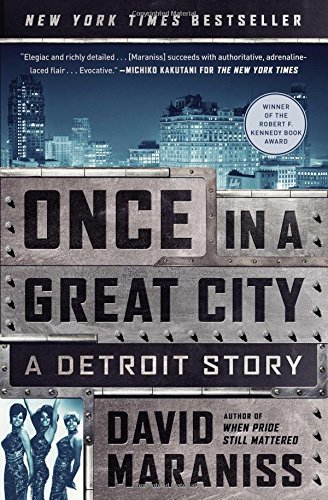
Once in a Great City: A Detroit Story, by David Maraniss

Once in a Great City: A Detroit Story, by David Maraniss


Once in a Great City: A Detroit Story, by David Maraniss

Fee Download Once in a Great City: A Detroit Story, by David Maraniss

Locate a lot more encounters and also expertise by reading the e-book qualified Once In A Great City: A Detroit Story, By David Maraniss This is a book that you are searching for, right? That corrects. You have pertained to the ideal site, then. We consistently offer you Once In A Great City: A Detroit Story, By David Maraniss and one of the most preferred books in the globe to download and also took pleasure in reading. You might not overlook that visiting this collection is a purpose or also by unintended.

Why should be Once In A Great City: A Detroit Story, By David Maraniss in this website? Obtain much more revenues as exactly what we have informed you. You could find the other relieves besides the previous one. Alleviate of obtaining the book Once In A Great City: A Detroit Story, By David Maraniss as just what you desire is also provided. Why? We offer you many type of the books that will certainly not make you feel weary. You can download them in the link that we provide. By downloading Once In A Great City: A Detroit Story, By David Maraniss, you have taken the right way to select the simplicity one, compared with the headache one.

The Once In A Great City: A Detroit Story, By David Maraniss has the tendency to be wonderful reading book that is easy to understand. This is why this book Once In A Great City: A Detroit Story, By David Maraniss comes to be a preferred book to check out. Why don't you desire turned into one of them? You could delight in reading Once In A Great City: A Detroit Story, By David Maraniss while doing other activities. The presence of the soft data of this book Once In A Great City: A Detroit Story, By David Maraniss is sort of getting encounter easily. It includes just how you must save the book Once In A Great City: A Detroit Story, By David Maraniss, not in racks of course. You could save it in your computer gadget as well as device.

By conserving Once In A Great City: A Detroit Story, By David Maraniss in the gadget, the method you check out will additionally be much simpler. Open it and start checking out Once In A Great City: A Detroit Story, By David Maraniss, simple. This is reason that we recommend this Once In A Great City: A Detroit Story, By David Maraniss in soft documents. It will not disturb your time to get guide. Furthermore, the online air conditioner will certainly additionally reduce you to look Once In A Great City: A Detroit Story, By David Maraniss it, also without going somewhere. If you have connection web in your office, house, or gizmo, you could download and install Once In A Great City: A Detroit Story, By David Maraniss it straight. You may not additionally wait to get guide Once In A Great City: A Detroit Story, By David Maraniss to send by the vendor in various other days.

Once in a Great City: A Detroit Story, by David Maraniss

“A fascinating political, racial, economic, and cultural tapestry” (Detroit Free Press), a tour de force from David Maraniss about the quintessential American city at the top of its game: Detroit in 1963.

Detroit in 1963 is on top of the world. The city’s leaders are among the most visionary in America: Grandson of the first Ford; Henry Ford II; Motown’s founder Berry Gordy; the Reverend C.L. Franklin and his daughter, the incredible Aretha; Governor George Romney, Mormon and Civil Rights advocate; car salesman Lee Iacocca; Police Commissioner George Edwards; Martin Luther King. The time was full of promise. The auto industry was selling more cars than ever before. Yet the shadows of collapse were evident even then.

“Elegiac and richly detailed” (The New York Times), in Once in a Great City David Maraniss shows that before the devastating riot, before the decades of civic corruption and neglect, and white flight; before people trotted out the grab bag of rust belt infirmities and competition from abroad to explain Detroit’s collapse, one could see the signs of a city’s ruin. Detroit at its peak was threatened by its own design. It was being abandoned by the new world economy and by the transfer of American prosperity to the information and service industries. In 1963, as Maraniss captures it with power and affection, Detroit summed up America’s path to prosperity and jazz that was already past history. “Maraniss has written a book about the fall of Detroit, and done it, ingeniously, by writing about Detroit at its height….An encyclopedic account of Detroit in the early sixties, a kind of hymn to what really was a great city” (The New Yorker).

  • Sales Rank: #17462 in Books
  • Brand: Simon Schuster
  • Published on: 2016-09-20
  • Released on: 2016-09-20
  • Original language: English
  • Number of items: 1
  • Dimensions: 8.37" h x 1.30" w x 5.50" l, .0 pounds
  • Binding: Paperback
  • 464 pages
Features
  • Simon Schuster

Review
* A Best Book of 2015 (The Economist) *

* Winner - Robert F. Kennedy Book Award *

“Elegiac and richly detailed . . . Maraniss . . . conjures those boom years of his former hometown with novelistic ardor. Using overlapping portraits of Detroiters (from politicians to musicians to auto execs), he creates a mosaiclike picture of the city that has the sort of intimacy and tactile emotion that Larry McMurtry brought to his depictions of the Old West, and the gritty sweep of David Simon’s HBO series “The Wire.” . . . People’s experiences intersect or collide or resonate with one another, and Mr. Maraniss uses them as windows on the larger cultural and political changes convulsing the nation in the ‘60s . . . [Maraniss] succeeds with authoritative, adrenaline-laced flair. . . . Maraniss cuts among story lines about the auto industry, the civil rights movement and City Hall, and among subplots involving Ford’s development of its top-secret new car (the singular Mustang), the police commissioner’s efforts to get the goods on the mobster Tony Giacalone and Berry Gordy’s construction of a hit factory with Motown. The result is a buoyant Frederick Lewis Allen-like social history that’s animated by an infectious soundtrack and lots of tactile details, and injected with a keen understanding of larger historical forces at work – both in Detroit and America at large. . . . Maraniss’s evocative book provides a wistful look back at an era when those cracks were only just beginning to show, and the city still seemed a place of “uncommon possibility” and was creating “wondrous and lasting things.” (Michiko Kakutani for The New York Times)

“Captivating . . . Maraniss hears the joyous sound of a city suddenly, improbably filled with hope. . . . Maraniss asks himself what in the city has lasted, a question that often haunts former Detroiters. The songs, he decides. Not the reforms, not the dream of racial justice, not the promise of a Great Society, but the wonderfully exuberant songs that came pouring out of Berry Gordy’s studio. That’s the tragedy at the core of this gracious, generous book. All that remains of the hopeful moment Maraniss so effectively describes is a soundtrack. And that isn’t nearly enough.” (The Washington Post)

“Once in a Great City is incandescent. Through evocative writing and prodigious research, David Maraniss offers us an unforgettable portrait of 1963 Detroit, muscular and musical, during the early days of Motown and the Mustang. Bursting with larger than life figures from Henry Ford II, Walter Reuther, and Mayor Jerome Cavanagh, to Berry Gordy, Martin Luther King, and Reverend C.L. Franklin, Aretha's father, this book is at once the chronicle of a city during its last fine time and also a classic American story of promise and loss.” (Gay Talese)

“The great virtue of Maraniss’s bighearted book is that it casts a wide net, collecting and seeking to synthesize these seemingly disparate strands. . . . Even where material is familiar, the connections Maraniss makes among these figures feel fresh. He’s even better on the lesser known. . . . Motown is clearly where Maraniss’s heart is, and it is where his materials—music, race, civil rights—come together most naturally. . . . You finish Once in a Great City feeling mildly shattered, which is exactly as it should be.” (New York Times Book Review)

“Maraniss has written a book about the fall of Detroit, and done it, ingeniously, by writing about Detroit at its height, Humpty Dumpty’s most poignant moment being just before he toppled over. . . . An encyclopedic account of Detroit in the early sixties, a kind of hymn to what really was a great city. . . . The display of municipal energies is so impressive that every page haunts us with the questions What went wrong? How could so much go so wrong so rapidly? How did a city of so many fruitful tensions and monuments and intermediary institutions turn into the ruins we see now, with scarcely a third of its 1950 population remaining and so many of the sites that Maraniss mentions ruined or destroyed?” (The New Yorker)

“David Maraniss is a journalist's journalist. . . . the book explores the optimism that existed in those days and the signs of major problems to come. It's a fascinating political, racial, economic and cultural tapestry.” (Detroit Free Press)

“David Maraniss turns back the clock to paint the picture of an American metropolis in its prime, however, one where the seeds of the city’s future fall were already starting to take root. . . . Maraniss’s recounting of the story of his birthplace has the distinct feeling of the first big drop of a roller coaster. A car chugging upward towards heady heights, but en route takes an inevitable plunge back into cold reality. . . . Maraniss is able to give these characters life by injecting them with foibles along with the force of personality that made them prominent figures in the building of the city. . . . The simple breadth of the book is impressive, with Maraniss merging and wrangling disparate storylines about culture, politics, race, and the Ford Mustang into a single patchwork image of the Motor City.” (Christian Science Monitor)

“A compelling portrait of one of America’s most iconic cities. . . . Maraniss highlights the class and race frictions that demarcated and defined the city and gives readers a glimpse of the colorful life of mobsters and moguls, entertainers and entrepreneurs. Among the famous Detroiters he highlights are Henry Ford II, Lee Iacocca, Berry Gordy Jr., George Romney, and the Reverend C. L. Franklin. Maraniss captures Detroit just as it is both thriving and dying, at the peak of its vibrancy and on the verge of its downfall.” (Booklist (starred review))

“A sprawling portrait of Detroit at a pivotal moment.” (Publishers Weekly)

“In celebration of what Detroit represented, this book is equally a study of what was lost and is written with an attractive wistfulness that pulls the reader in. The narrative's tone of reminiscence makes it entertainingly informative. . . A colorful, detailed history of the rise and ultimate decline of Detroit.” (Library Journal)

“Fast-paced,sprawling, copiously detailed look at 18 months—from 1962 to 1964—in the city's past . . . Maraniss' brawny narrative evokes a city still ‘vibrantly alive’ and striving for a renaissance. An illuminating history of a golden era in a city desperately seeking to reclaim the glory.” (Kirkus Reviews)

“[A] glimmering portrait of Detroit . . . that will leave the reader thoroughly haunted. . . . Once in a Great City has it all: significant scenes, tremendously charismatic figures, even a starry soundtrack. . . . Reading about the city in its hey day is like falling backward in time and running into someone whose youthful blush you’d completely forgotten. Detroit is that someone. She is bright and laughing, flickering before you like a specter from the past. I doubt I’ll forget her anytime soon.” (Bookpage)

"Maraniss . . . undoubtedly will attract notice and focus even more attention on Detroit. . . . a unique and absorbing take. . . . As often as authors have told the story of Gordy and the rise of Motown, Maraniss still captures the vitality and enterprise on West Grand Boulevard in a fresh way. . . . [Maraniss] is equally adept at capturing the white-run city’s complex racial dynamics at a time when black leaders were becoming more militant and clashing with each other over the proper level of assertiveness. Maraniss . . . is a skillful storyteller, and his interpretation of events in Detroit a half century ago is well founded. . . . Maraniss will only add to his reputation with Once in a Great City. It’s a good read if your interest is only to visit Detroit’s remarkable recent past. It’s even a better read if you are interested in the city’s extraordinary devolution. In either case, it’s a story that is haunting, thought-provoking and, in the end, sad." (DeadlineDETROIT.com)

“A sobering portrait of a city that felt itself to be at the peak of its power and influence in a "time of uncommon possibility and freedom when Detroit created wondrous and lasting things," even as the forces that would topple it had set about their work. The principal strength of Maraniss's book lies in his skill at marshaling copious research to serve his sophisticated account of a complex, vibrant city balanced on its tipping point. . . . Sadly, one can't avoid the conclusion that never again will it be the city David Maraniss portrays with empathy and candor in this impressive book.” (Shelf Awareness)

“Maraniss . . . aptly traces these two narratives — cars and race — in chronicling a pivotal period of his hometown’s history. Spanning autumn 1962 to spring 1964, the book bustles with vivid characters, from Berry Gordy and C.L. Franklin (Aretha’s father), to Walter Reuther and George Romney (Mitt’s father). “It all looked so promising,” Maraniss writes, paraphrasing Detroit Mayor Jerome Cavanagh’s conversation with President Johnson after his 1964 visit, but even in those halcyon days, “some part of Detroit was dying,” a casualty of white flight, the demise of labor unions, and a changing world. This is a beautifully written tribute to that lost, great city.” (The Boston Globe)

“Combining hindsight and insight with deep-dive research, Maraniss provides a clear-eyed flashback to a once-powerful manufacturing metropolis intoxicated by cheap gasoline, swaggering hubris and blue-sky confidence. . . . Maraniss examines modern history in the dogged manner of David Halberstam and Robert Caro. Between the lines, he leaves an unwritten thought for both today’s optimists and pessimists. If things could go change so much in just 50 years, what might the next half-century bring?” (The Detroit News)

“One of America’s finest non-fiction writers, a son of Detroit, offers a lively and meticulously researched account of how the city, once the engine room of America, began sputtering.” (The Economist)

“Maraniss’ well-written and researched book well remembers the city of Detroit in the early 1960s as a place where factories hummed, Motown rocked and the present gave little warning that Detroit would become a ‘city of decay.’” (Seattle Times)

About the Author
Born in Detroit, David Maraniss is an associate editor at The Washington Post. Maraniss is a Pulitzer Prize–winning journalist and bestselling author of Once in a Great City: A Detroit Story; First in His Class: A Biography of Bill Clinton; Rome 1960: The Olympics that Stirred the World; Barack Obama: The Story; Clemente: The Passion and Grace of Baseball’s Last Hero; They Marched into Sunlight: War and Peace, Vietnam and America, October 1967; and When Pride Still Mattered: A Life of Vince Lombardi, which was hailed by Sports Illustrated as “maybe the best sports biography ever published.” He lives in Washington, DC, and Madison, Wisconsin.

Excerpt. © Reprinted by permission. All rights reserved.
Once in a Great City Chapter 1 GONE


THE NINTH OF NOVEMBER 1962 was unseasonably pleasant in the Detroit area. It was an accommodating day for holiday activity at the Ford Rotunda, where a company of workmen were installing exhibits for the Christmas Fantasy scheduled to open just after Thanksgiving. Not far from a main lobby display of glistening next-model Ford Thunderbirds and Galaxies and Fairlanes and one-of-a-kind custom dream cars, craftsmen were constructing a life-size Nativity scene and a Santa’s North Pole workshop surrounded by looping tracks of miniature trains and bountiful bundles of toys. This quintessentially American harmonic convergence of religiosity and consumerism was expected to attract more than three-quarters of a million visitors before the season was out, and for a generation of children it would provide a lifetime memory—walking past the live reindeer Donner and Blitzen, up the long incline toward a merry band of hardworking elves, and finally reaching Santa Claus and his commodious lap.

The Ford Rotunda was circular in an automotive manufacturing kind of way. It was shaped like an enormous set of grooved transmission gears, one fitting neatly inside the next, rising first 80 then 90 then 100 then 110 feet, to the equivalent of ten stories. Virtually windowless, with its steel frame and exterior sheath of Indiana limestone, this unusual structure was the creation of Albert Kahn, the prolific architect of Detroit’s industrial age. Kahn had designed it for the Century of Progress exposition in Chicago, where Ford’s 1934 exhibit hall chronicled the history of transportation from the horse-drawn carriage to the latest Ford V-8. When that Depression-era fair shuttered, workers dismantled the Rotunda and moved it from the south side shore of Lake Michigan to Dearborn, on the southwest rim of Detroit, where it was reconstructed to serve as a showroom and visitors center across from what was then Ford Motor Company’s world headquarters. Later two wings were added, one to hold Ford’s archives and the other for a theater.

In the fullness of the postwar fifties, with the rise of suburbs and two-car garages and urban freeways and the long-distance federal interstate system, millions of Americans paid homage to Detroit’s grand motor palace. For a time, the top five tourist attractions in the United States were Niagara Falls, the Great Smokey Mountains National Park, the Smithsonian Institution, the Lincoln Memorial, and the Ford Rotunda. The Rotunda drew more visitors than Yellowstone, Mount Vernon, the Statue of Liberty, or the Washington Monument. Or so the Ford publicists claimed. Chances are you have not heard of it.

To appreciate what the Rotunda and its environs signified then to Detroiters, a guide would be useful, and for this occasion Robert C. Ankony fills the role. Ankony (who went on to become an army paratrooper and narcotics squad officer, eventually earning a PhD in sociology from Wayne State University) was fourteen in November 1962, a chronic juvenile delinquent who specialized in torching garages. Desperate to avoid drudgery and boredom, he knew the Rotunda the way a disaffected boy might know it. Along with the Penobscot Building, the tallest skyscraper downtown, the Rotunda was among his favorite places to hang out when he played hooky, something he did as often as possible, including on that late fall Friday morning.

“The Highway” is what Ankony and his friends called the area where they lived in the southwest corner of Detroit. The highway was West Vernor, a thoroughfare that ran east through the neighborhood toward Michigan Central Station, the grand old beaux arts train depot, and west into adjacent Dearborn toward Ford’s massive River Rouge Complex, another Albert Kahn creation and the epicenter of Ford’s manufacturing might. In Detroit Industry, the legendary twenty-seven-panel murals at the Detroit Institute of Arts painted by Diego Rivera and commissioned by Edsel Ford, the founder’s son, among the few distinguishable portraits within the scenes of muscular Ford machines and workers is that of Kahn, wearing wire-rim glasses and work overalls. Ankony experienced Detroit industry with all of his senses: the smoke and dust and smells drifted downwind in the direction of his family’s house two miles away on Woodmere at the edge of Patton Park. His mother, Ruth, who could see the smokestacks from her rear window, hosed the factory soot off her front porch every day. What others considered a noxious odor the Ankonys and their neighbors would describe as the smell of home.

On the morning of November 9, young Bob reported to Wilson Junior High, found another boy who was his frequent collaborator in truancy, and hatched plans for the day. After homeroom, they pushed through the double doors with the horizontal brass panic bars, ran across the school grounds and over a two-foot metal fence, scooted down the back alley, and were free, making their way to West Vernor and out toward Ford country.

It was a survival course on the streets, enlivened by the thrill of avoiding the cops. Slater’s bakery for day-old doughnuts, claw-shaped with date fillings, three cents apiece. Scrounging curbs and garbage cans for empty soda bottles and turning them in for two cents each. If they had enough pennies, maybe go for a dog at the Coney Island on Vernor. Rounding the curve where Vernor turned to Dix, past the Dearborn Mosque and the Arab storefronts of east Dearborn. (Ankony’s parents were Lebanese and French; he grew up being called a camel jockey and “little A-rab.”) Fooling around at the massive slag piles near Eagle Pass. Dipping down into the tunnel leading toward the Rouge, leaning over a walkway railing and urinating on cars passing below, then up past the factory bars, Salamie’s and Johnny’s, and filching lunches in white cardboard boxes from the ledge of a sandwich shop catering to autoworkers on shift change. Skirting the historic overpass at Miller Road near Rouge’s Gate 4, where on an afternoon in late May 1937 Walter Reuther and his fellow union organizers were beaten by Ford security goons, a violent encounter that Ankony’s father, who grew up only blocks away, told his family he had witnessed. Gazing in awe at the Rouge plant’s fearsomely majestic industrial landscape from the bridge at Rotunda Road, then on to the Rotunda itself, where workmen were everywhere, not only inside installing the Christmas displays but also outside repairing the roof.

To Ankony, the Rotunda was a wonderland. No worries about truant officers; every day brought school groups, so few would take notice of two stray boys. With other visitors, including on that day a school group from South Bend, they took in the new car displays and a movie about Henry Ford, then blended in with the crowd for a factory tour that left by bus from the side of the Rotunda over to the Rouge plant, then the largest industrial complex in the United States. Ankony had toured the Rouge often, yet the flow of molten metal, the intricacies of the engine plant, the mechanized perfection of the assembly, all the different-colored car parts coming down the line and matching up, the wonder of raw material going in and a finished product coming out, the reality of scenes depicted in Rivera’s murals, thrilled him anew every time. The Rouge itself energized him even as Rivera’s famed murals frightened him. The art, more than the place itself, reminded him of the gray, mechanized life of a factory worker “in those dark dungeons” that seemed expected of a working-class Detroit boy and that he so much yearned to avoid.

When the Rouge tour ended in early afternoon, Ankony and his pal had had enough of Ford for the day and left for a shoplifting spree at the nearby Montgomery Ward store at the corner of Schaefer Road and Michigan Avenue, across the street from Dearborn’s city hall. They were in the basement sporting goods department, checking out ammo and firearms, when they heard a siren outside, then another, a cacophony of wailing fire trucks and screeching police cars. The boys scrambled up and out and saw smoke billowing in the distance. Fire!—and they didn’t start it. Fire in the direction of the Rotunda. They raced toward it.

Roof repairmen since midmorning had been taking advantage of the fifty-degree weather to waterproof the Rotunda’s geodesic dome panels. Using propane heaters, they had been warming a transparent sealant so that it would spray more easily. At around 1 p.m., a heater ignited sealant vapors, sparking a small fire, and though workmen tried to douse the flames with extinguishers they could not keep pace and the fire spread. The South Bend school group had just left the building. Another tour for thirty-five visitors was soon to begin. There was a skeleton staff of eighteen office workers inside; many Rotunda employees were at lunch. A parking lot guard noticed the flames and radioed inside. Alarm bells were sounded, the building was evacuated, the roof repairmen crab-walked to a hatch and scrambled down an inside stairwell, and the Dearborn and Ford fire departments were summoned, their sirens piercing the autumn air, alerting, among others, two truant boys in the Monkey Ward’s basement.

By the time firefighters reached the Rotunda, the entire roof, made of highly combustible plastic and fiberglass, was ablaze. Two aerial trucks circled around to the rear driveway. From the other side, firefighters and volunteers stretched hoses from Schaefer Road and moved forward cautiously. It was too hot, and the water pressure too limited, to douse the fire with sprays up and over the 110 feet to the roof. The structure’s steel frame began to buckle. At 1:56, fire captains ordered their men away from the building, just in time. Robert Dawson, who worked in the Lincoln-Mercury building across the street, looked over and saw a “ball of fire” on the roof but at first no flames below. “Suddenly the roof crashed through. Everything inside turned to flame. Smoke began sifting through the limestone walls. Then, starting at the north corner, the walls crumbled. It was as though you had stacked dominoes and pushed them over.” The fire had reached the Christmas displays, fresh and potent kindling, and raged out of control, bright flames now shooting fifty feet into the sky. The entire building collapsed in a shuddering roar, a whirlwind of hurtling limestone and concrete and dust.

Most helpful customer reviews

31 of 32 people found the following review helpful.
What every American can learn from Detroit
By Joseph J. Serwach
The great Pulitzer Prize-winning David Maraniss does what no other author can: puts the Detroit story into a global perspective that is educational, informative and fun to any reader anywhere. I studied history in my undergraduate years (and helped expand the Pure Michigan and Michigan brands in recent years) and have subsequently read most of the major histories of Detroit and Michigan. Most fall into two categories: 1. A Michigan-centric author full of details of local interest but lacking a big picture perspective beyond the Great Lakes State. 2. A national writer looking for a bigger story who doesn't quite "get" the culture, the topic or the details. The Michigan born Maraniss bridges that divide, speaking our language and telling a story that will play in Peoria or Pleasant Ridge, in LA or in downtown Detroit. He masterfully finds the 18-month period when Detroit had its greatest impact on the United States as a whole (fall 1962 to spring 1964). His book is a must-read page turner that will delight Michiganders as well as audiences far beyond Michigan. The characters include famous names like Henry Ford, Berry Gordy, JFK, LBJ, Walter Reuther, Motown, the first Mustang and Martin Luther King but the real star of the book is Detroit itself. Too often, national reporters consider the land between East and West coasts to be "flyover country" believing the truly important things occur on the coasts. David Maraniss shows better than anyone how Detroit shaped the world and what the world can learn from the mid-1960s pride that prefaced the fall of the last half century. In the process, he shows you Detroit's soul. Marannis, the Washington Post reporter who penned the best ever biography on Bill Clinton, explained better than anyone what made Clinton tick. Now this Detroit native who spent his career on a national stage shows what makes Detroit tick and why Detroit matters to the rest of the world.

106 of 114 people found the following review helpful.
Maraniss has found the gems in Detroit's storied early 60's and tells them in a wonderful, absorbing and awakening fashion.
By MJC
"Detroit". No American city, or perhaps even an international city to some lesser extent, invokes, excites or incites an opinion as much as Detroit, Michigan. It was a city that was truly deserving to be called "Great" as David Maraniss explains in his fabulous account of Detroit during perhaps its headiest years. I think I should know; I am the eldest son of Jerome P. Cavanagh, the Mayor of Detroit from 1962-1970 whose first two years coincided with Mr. Maraniss's time period. I lived at the epicenter of this beautiful city, met and even to some extent, knew all of the major characters Mr. Maraniss writes about, President Kennedy, President Johnson, Walter Reuther, Barry Gordy, The Supremes, Commissioner George Edwards, Michigan Governors John B. Swainson and his successor, Governor George Romney (Mitt's father), most of the minor characters and even just the "characters". I spent much time at my father's office, became friends with all of his important staffers, attended many functions, celebrations, parades, gatherings, openings (they were almost ALL openings) and traveled with my father around the country to Mayoral conventions and other gatherings of like-minded and elected officials, their families and those involved in their cities. I heard it all and saw it all right at the source. My father never hesitated in making his older children a witness to and a part of these gatherings and these events; he thought them a good experience for us, and they were. The absolute best! We lived for those times and the people who made them happen in Detroit. I was with my father at the Rotunda a week before it burned. I was in the lobby of the Sheraton Cadillac Hotel in Detroit in October 1962, where following a meeting my father had with President Kennedy upstairs in the Presidential suite, the President and my father came downstairs. My father noticed me there in the lobby and had the President come over meet me and shake my hand. Heady times! Dad had only been Mayor of Detroit for 10 months and already he'd become close to President Kennedy. I watched Dad help orchestrate Detroit's pitch to win its selection by President Kennedy through the US Olympic Committee to represent the United States as its host city for the 1968 Olympics.There was magic in the air. In short, while everyone has their opinions, I was a living witness to Detroit's greatness so ably captured in Mr. Maraniss's book. I was old enough to know and understand, but most of all FEEL the greatness of Detroit. Everyone I knew felt the same way. We could feel it changing for the better almost every day.

And yes, I saw it change almost overnight during the 1967 riots (and yes, they were riots). I watched my father's heart break at the crushing blow to the city he deeply loved and cared about. In a few days time, those disturbances seemingly wiped out all the progress and the immensely successful and renowned work he and many others did to make Detroit a "Model City".

And yet as Mr. Maraniss says so insightfully, all of the writing was on the wall. Detroit's trend downwards was ever so subtle yet it had begun 10 years before the time period he chose to write about. While it was not evident to anyone but the scholar at the time, some of the bricks in the Detroit's foundation were beginning to come out. After all, why was the city selected as a "Model City", the subject of a President's grand vision for revitalized urban life and the recipient of hundreds of millions of dollars in federal funds to accomplish that unless there is/was some inherent decay already in existence. Money certainly wasn't what the sick patient needed.

To me, it is obvious that Mr. Maraniss wrote about a city that had meant something to him in one way as a native son and as another as an expatriate and adult, able to have stepped aside and seen the larger picture. And yet, while his book can be viewed as a harbinger or lesson for others to live by, it can also be viewed as a city that has not and will not die. I think of his portrayal of Detroit during this time as similar to Florence during the Renaissance when from all corners appear the most diverse and singular men and women, injecting their lives into and placing their stamp upon a local place, its results being long-lasting and with far-reaching effects. We are still seeing those effects in many, many examples today. And GREAT cities don't just go away. And it is unfair to say that Detroit was this or was that, as if the past is the only definition of a living thing. Everything changes. We are here to learn from the past. No, Detroit is not what it was when I was the son of the Mayor but it is still alive and getting better all the time with the same solid commitment and determination from its citizens as it has had at any other time. The methodology might be different but the purpose is still the same. Its greatness is what keeps people's hands in the mix; the effort to preserve what can be preserved, restore what can be restored and build what can be built. Do I miss the old Detroit of David Maraniss's book? Of course. And even more so after reading his exquisitely researched, exhaustive character studies and incredibly loving and entertaining book that captures two of the most ground-shaking years of 20th century Detroit.
Ideally, an author writes about what he or she loves. Once completed, the books or poems become their children. Personally, I felt much his personal involvement and even love behind Mr. Maraniss's story. This gives the book part of its vitality. His zeal for his subject is evident and his unmatchable skills as a writer and story teller have helped propel Detroit back into the chatter. No bad can come of this. Cities once "GREAT" never die. Yes, they get a lot of symbolic dirt thrown over their prematurely buried caskets and people want to hang the crepe LONG before the ceremony has begun. But as Detroit did not see its transition from GREAT to deeply troubled occur in weeks, months or a few years, so it will not see its current rebirth occur in one fell swoop. Change is only noticeable to those who have a perch on a high vantage point and years to have passed by from which to assess. Ah yes, then, the less scholarly Monday Morning Quarterbacking begins by people who in most cases were not even involved, present or even alive. The image of Detroit excites this behavior like no other city in the United States does. But as long as the chatter is going, the City is alive. Having been provided with an urban blueprint such as David Maraniss gives us, we should take all the good in it and through away the bad. To use a metaphor, Maraniss's outstanding research and writing has provided us with the cliff notes. He's done the heavy lifting for us. Florence is great, yet its impact ended over 400 years ago. Rome is still great, although it fell in the 500's. Athens is another example. There are many more. Like those "dead" cities, they are still great. And whether one can compare any or all of this fact to Detroit, Mr. Maraniss's powerful rendering of its amazing history in these monumental years between 1962-1964, make me feel that no other city has a past more enviable than Detroit's. It is Detroit's GREAT past that serves as a major component of its present success. As in years gone by Detroit the former "Model City", can and is using the lessons from the past to create something unique again-something unique as the years from 1962-1964 were. We have David Maraniss to thank for clearing our vision so as not to step into the same holes again. We have been reminded of our storied past and been provided with the trajectory. It is up to us. Maraniss has given us a wonderful romp and yet where necessary, a harsh (it's for your own good) bed-side script that we can efficaciously use with respect to Detroit or any other ailing city.

1 of 1 people found the following review helpful.
including a brilliant biography of Vince Lombardi
By Marc W. Schneider
Even though I have never lived there, I feel a connection with Detroit. My father was born and raised there, I still have some family there,and I was there a few times as a child in what were still the city's glory days. I saw a game at Tiger Stadium, toured a Ford factory (very hot and noisy) and saw a vibrant, dynamic downtown. More than that, as a history buff, Detroit has always fascinated me as, first, the Arsenal of Democracy during World War II, then the engine (no pun intended) of American prosperity during the Cold War, and, finally and sadly, of course, the ultimate symbol of American urban decline.

David Maraniss was a reporter for the Washington Post and has written a number of other books, including a brilliant biography of Vince Lombardi, which I highly recommend. He was born in Detroit although his family moved when he was young. I think this is a great book.

The book covers the time period roughly from late 1962 to late 1964, with the emphasis being on 1963, a time when America was truly on top of the world although cracks were beginning to show. Detroit was at its height; the country as a whole was prosperous, the car industry was booming, and no one, I'm sure, could possibly have imagined a time when Japanese cars would be a serious threat to the Ford, Chrysler, and GM. Detroit was a vibrant, dynamic city which, in fact, even bid on the 1968 Summer Olympics, a fact which astonished me; indeed, Detroit was selected over Los Angeles as the American bidder for the games. (The Games eventually went to Mexico City.) It's simply incredibly today to think about Detroit as being a serious competitor for the Olympics. But that's what Detroit was in 1963. And the auto industry helped to create a solid middle class African-American community which, ultimately, fueled the growth of Motown, probably one of, if not the, first large-scale African-American enterprises. The auto industry, despite the racism of many union members (and, yes, they were racists), enabled many black families to purchase pianos, which created a pool of musical talent that fueled the Motown sound, which remains one of the aspects of American culture that is most embraced by the rest of the world. (Sorry, Richard Spencer.) When Maraniss was describing the songs that came out, I found myself humming along.

Yet, even in 1963, there were portents of what was to come. Already the city was beginning to lose residents, losing 200,000 between 1960 and 1964. Maraniss suggests that much of this was caused by urban renewal projects, which built freeways through downtown, destroying solid African-American neighborhoods, and enabling whites to move to the suburbs and still easily commute into the city for work. Maraniss argues that the movement of whites into the suburbs created a pool of vacant housing in those neighborhoods; the destruction of the thriving black communities forced African-Americans into those previously white neighborhoods, which, in turn, led to more outmigration by whites, fueled in large part by unscrupulous "blockbusting" realtors.

A lot of conservatives reviewing books on Detroit complain about the emphasis on racism in Detroit's decline. And, while this is beyond the kin of the book, I'm comfortable in saying that there were many other factors besides racism that led to the Detroit we know today. Nevertheless, there was plenty of pure racism in Detroit. In 1963, Detroit had a liberal mayor (Jerome Cavanagh) and the governor of Michigan was George Romney (Mitt's father). George Romney was a Republican of a kind that would beggar belief today; he probably would not be allowed into a Republican convention. Both the mayor and governor were more liberal than a large proportion of their constituents. At the time, many neighborhoods in Detroit had covenants, either official or informal, that either prohibited or restricted selling houses to minorities. Of course, this was especially applied to African-Americans. In 1963, the Detroit City Council considered a bill to outlaw restrictive covenants (w.hich were later outlawed by the US Supreme Court). Because of pressure from whites (and Maraniss quotes several of the letters to the City Council), the Council rejected the bill. (He also cites a statement in a different context by Rush Limbaugh's father to the effect that their home town of Cape Girardeau, Missouri never had a black resident and never would. Like father, like son, I guess).

Still, it's a largely upbeat picture of Detroit in 1963, shadowed, of course, by the knowledge of what is to come. I found the discussion of the car industry and the completely different cultural context most interesting. Maraniss focuses primarily on Ford and, especially, on Henry Ford II, the original Henry Ford's grandson. He was quite a character or a cad depending on your point of view. It's actually pretty amusing reading about how the auto executives lived and how the various neighborhoods were segregated according to how high up people were. Presidents and CEOs of the companies lived in one neighborhood; the even tonier neighborhoods were reserved for people like the Fords. It was a very stratified society; they certainly would not live with the Hoi Polloi. Young women in this set still had elaborate "coming out" parties which, in 1963 had a much different meaning than it does now. It seems quaint and sort of innocent reading about it today.

The one mistake I think Maraniss made is that he started venturing off into stories that were only tangentially related to Detroit. For example, he spends a lot of time discussing how the team trying to land the Olympics for Detroit went to Switzerland to present to the International Olympic Committee. Fine, but he spends too much time talking about details of the trip that really had nothing to do with Detroit.

Ultimately, this is a sad story because, as I noted, there is always a foreshadowing of what is to come. The arrogance of the Big 3 and its refusal to accept that the public was starting to want smaller cars eventually decimated the American car industry and Detroit itself. Detroit still has a significant car industry (and the concomitant suppliers and contractors to the industry)but much of it is outside of Detroit. The city is slowly recovering I suppose but whatever it becomes it will not be like the Detroit of 1963.

See all 195 customer reviews...

Once in a Great City: A Detroit Story, by David Maraniss PDF
Once in a Great City: A Detroit Story, by David Maraniss EPub
Once in a Great City: A Detroit Story, by David Maraniss Doc
Once in a Great City: A Detroit Story, by David Maraniss iBooks
Once in a Great City: A Detroit Story, by David Maraniss rtf
Once in a Great City: A Detroit Story, by David Maraniss Mobipocket
Once in a Great City: A Detroit Story, by David Maraniss Kindle

Once in a Great City: A Detroit Story, by David Maraniss PDF

Once in a Great City: A Detroit Story, by David Maraniss PDF

Once in a Great City: A Detroit Story, by David Maraniss PDF